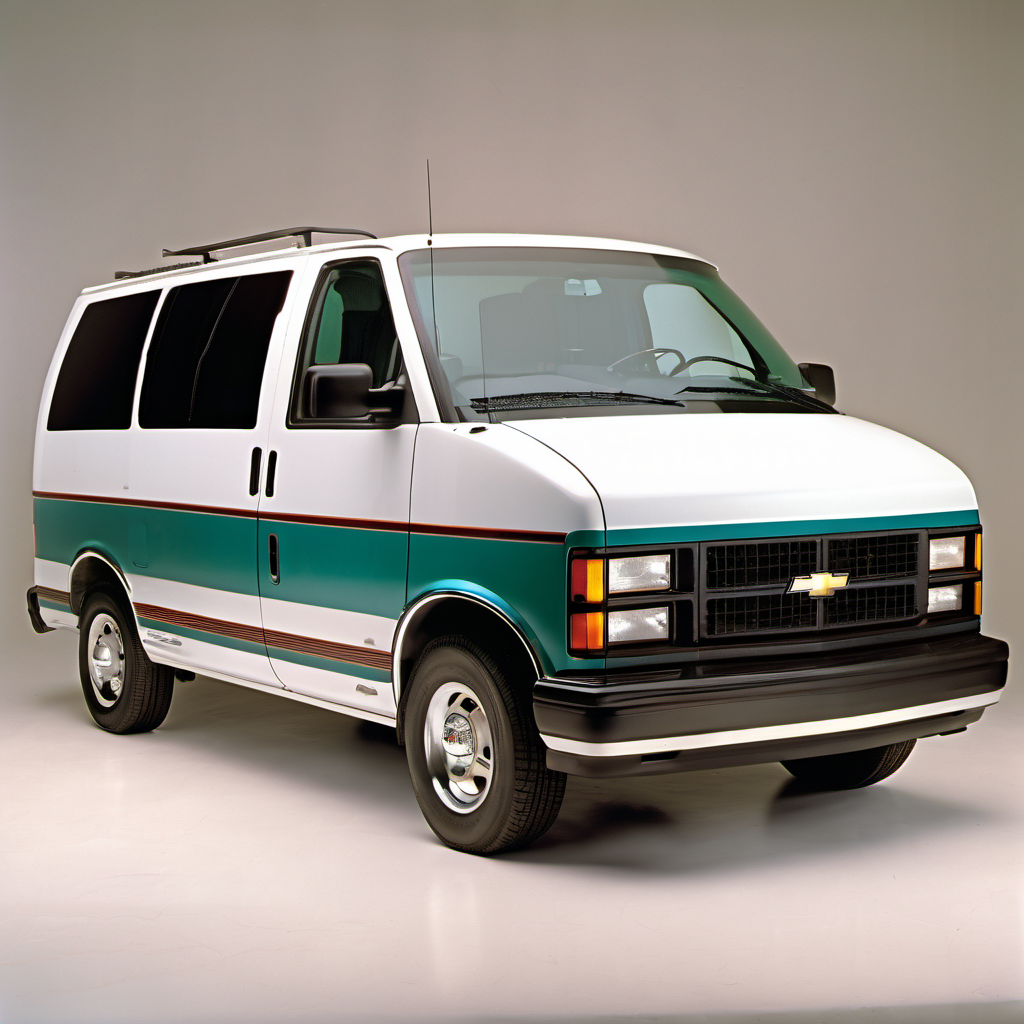
1995 Chevrolet Astro Cargo Van/Minivan

1995 Chevrolet

Astro CargoVan/Minivan

Van/Minivan

The 1995 Chevrolet Astro Cargo Van is the commercial, no-rear-seat variant of GM's body-on-frame minivan platform, shared with the GMC Safari. Built in Baltimore on a rear-wheel-drive (or all-wheel-drive) truck chassis, it was aimed squarely at small businesses and tradespeople who needed maximum cargo volume in a van-sized footprint. Unlike the front-wheel-drive Chrysler minivans of the era, the Astro's truck underpinnings gave it genuine towing capacity and a more rugged character—at the cost of ride comfort and fuel economy. Power comes from GM's bulletproof 4.3L Vortec V6 (the 262 CID engine), essentially five-sixths of the legendary 350 small-block V8. Mated to a 4-speed automatic, it delivers adequate grunt for loaded cargo work. The AWD system was optional and adds front-axle hardware that requires extra attention on a used example. Cargo volume behind the front seats is generous—nearly 170 cubic feet of total capacity—and the low step-in height makes loading practical. By 1995, the Astro was already a mature, well-understood platform. Parts are extremely affordable and almost universally available at any auto parts store. These vans were workhorses; many are still in daily commercial service well past 200,000 miles when maintained regularly. Rust is the primary long-term enemy, especially in Wisconsin's salt-heavy winters.

Reliability
3/5
Verified data
Specs shown for Astro AWD (cargo) — the most common configuration. Other trims may vary in engine, drivetrain, or fuel economy. Sign in to see your vehicle's exact specs.
Engine
[object Object]
Drivetrain
AWD
Fuel
Premium gasoline
MPG
15 city / 20 hwy / 16 combined
Seats
—
Doors
—
Body
Vans

Overview

AI-curated

The 1995 Chevrolet Astro Cargo Van is the commercial, no-rear-seat variant of GM's body-on-frame minivan platform, shared with the GMC Safari. Built in Baltimore on a rear-wheel-drive (or all-wheel-drive) truck chassis, it was aimed squarely at small businesses and tradespeople who needed maximum cargo volume in a van-sized footprint. Unlike the front-wheel-drive Chrysler minivans of the era, the Astro's truck underpinnings gave it genuine towing capacity and a more rugged character—at the cost of ride comfort and fuel economy. Power comes from GM's bulletproof 4.3L Vortec V6 (the 262 CID engine), essentially five-sixths of the legendary 350 small-block V8. Mated to a 4-speed automatic, it delivers adequate grunt for loaded cargo work. The AWD system was optional and adds front-axle hardware that requires extra attention on a used example. Cargo volume behind the front seats is generous—nearly 170 cubic feet of total capacity—and the low step-in height makes loading practical. By 1995, the Astro was already a mature, well-understood platform. Parts are extremely affordable and almost universally available at any auto parts store. These vans were workhorses; many are still in daily commercial service well past 200,000 miles when maintained regularly. Rust is the primary long-term enemy, especially in Wisconsin's salt-heavy winters.

Known for
  • Tough truck-based body-on-frame construction
  • Legendary 4.3L Vortec V6 durability
  • Generous flat cargo floor without rear seats
  • Available AWD for light off-road and winter traction
  • Extremely low parts and repair costs
Best for
  • Small business owners and tradespeople needing cargo capacity
  • Budget-minded buyers wanting a capable, repairable van
  • Light towing (up to 5,500 lbs with proper equipment)
  • Buyers comfortable with basic mechanical maintenance
Watch for
  • Severe rust on frame rails, rocker panels, and rear wheel arches — endemic in Wisconsin
  • AWD front axle seals, actuator, and differential wear on high-mileage examples
  • Intake manifold gasket leaks (lower gasket is a known 4.3L failure point)
  • Aging rubber fuel lines and EVAP hoses that crack and leak with age
  • Electrical gremlins from 30-year-old wiring and corroded connectors

Common issues by mileage

6 known

Lower Intake Manifold Gasket Leak

high
Typically appears
80–150k mi
Estimated repair
$350 – $650

AWD Front Axle Actuator & Seal Failure

medium
Typically appears
80–180k mi
Estimated repair
$200 – $500

Fuel Pressure Regulator / Spider Injector Failure

medium
Typically appears
100–160k mi
Estimated repair
$250 – $550

4L60-E Transmission Slipping or 2nd-Gear Starts

medium
Typically appears
120–200k mi
Estimated repair
$800 – $2,200

Oxygen Sensor Failure (Bank 1 Sensor 1 or Bank 1 Sensor 2)

high
Typically appears
80–130k mi
Estimated repair
$80 – $200

Frame and Rocker Panel Rust / Perforation

high
Typically appears
Any mileage on upper-Midwest examples
Estimated repair
$500 – $3,500

Maintenance schedule

  1. 1
    Every 3,000–5,000 miles (use conventional 10W-30 or 5W-30) Engine oil and filter change

    The 4.3L Vortec's internal oil passages are sensitive to sludge; keeping clean oil in it extends lifter and pushrod life significantly on a 30-year-old engine.

  2. 2
    Inspect at 80k mi; replace proactively if not already done on any example over 100k mi Inspect and replace lower intake manifold gaskets

    The factory composite gaskets fail and allow coolant into the oil or an external coolant weep—catching this early prevents expensive engine damage.

  3. 3
    Every 30,000 miles or whenever service history is unknown AWD front differential and transfer case fluid change

    Neglected AWD fluids cause premature differential and transfer case wear. On a 30-year-old van, assume it needs fresh fluid unless you have proof.

  4. 4
    Annually Inspect fuel lines, EVAP hoses, and rubber coolant hoses

    Rubber components from 1995 are past their service life. Cracked fuel lines are a fire risk; cracked coolant hoses cause overheating. These are cheap to replace and expensive to ignore.

  5. 5
    Every 30,000 miles Transmission fluid and filter service

    The 4L60-E is durable but hates dirty fluid. Vans used for cargo work put extra load on the trans; fresh fluid and a new filter add years of life.

  6. 6
    Every spring after Wisconsin winter; treat bare metal annually before winter Undercarriage rust inspection and treatment

    Salt and brine from Wisconsin roads accelerate frame and floor pan corrosion. Annual inspection lets you catch perforation early and treat surface rust before it progresses.

  7. 7
    Every 30,000 miles Spark plugs and plug wires

    The 4.3L runs better and more efficiently with fresh plugs. Original plug wires on a 30-year-old van are a misfire waiting to happen—replace them as a set.

  8. 8
    Every fall before winter Battery load test and terminal cleaning

    Cold Lake Geneva winters demand a strong battery. The 4.3L needs good cranking power at sub-zero temperatures; a marginal battery that starts fine in October will fail in January.

Always defer to the manufacturer's service manual for warranty-mandated intervals.

Cost of ownership

Annual maintenance
$600 – $1,800
Fuel
At 16 MPG combined and typical driving, expect $150–$220/month in fuel at current Wisconsin prices. Cargo loads and frequent short trips push it toward the lower end of the MPG range.
Insurance
Commercial cargo van insurance varies widely by use. Personal-use coverage is generally affordable for a 30-year-old van—expect $600–$1,200/year depending on driving history and use type. Verify with your insurer that cargo use is covered under your policy.

Day-to-day running costs on a well-maintained Astro Cargo are modest—parts are cheap and widely available at any parts store. The big financial risk on a 30-year-old Wisconsin van is deferred maintenance catching up all at once: a neglected intake gasket plus a transmission service plus rust repair can run $3,000–$5,000 in a single season. Stay ahead of maintenance and this van is one of the most cost-effective cargo haulers you can own.
Seasonal care

Lake Geneva, WI
Winter
  • Load-test the battery every October — sub-zero cranking a 4.3L with a weak battery is how you get stranded on a job site in January.
  • Switch to 5W-30 full synthetic if using conventional oil — cold starts are easier on the engine and the oil reaches the top end faster in sub-zero temps.
  • Flush the washer fluid reservoir and lines with -20°F-rated fluid before first freeze — summer fluid turns to slush and cracks the pump.
  • Inspect and treat all undercarriage surfaces with rust inhibitor before first snowfall — Lake Geneva road brine is extremely aggressive on this era's frame steel.
  • Check AWD actuator function in the fall — you want to know it works before you need it on an icy road, not after.
  • Keep the rear cargo area clear of snow and ice accumulation — weight distribution on an already rear-heavy van affects winter handling significantly.
Summer
  • Check tire pressure monthly — summer heat causes pressure to rise; overinflation accelerates center tread wear on a loaded cargo van.
  • Inspect the A/C system for refrigerant leaks — the Astro's R-134a system (if already converted from R-12) benefits from a pressure check before peak heat.
  • Watch coolant temperature closely when running loaded in stop-and-go heat — the 4.3L runs warm under load; a marginal thermostat or weak water pump shows itself in summer.
  • Check rubber door and cargo door seals — cracked seals let heat and water in and are inexpensive to replace before they deteriorate further.

Comparable vehicles

1995 GMC Safari Cargo
1995 GMC
Safari Cargo

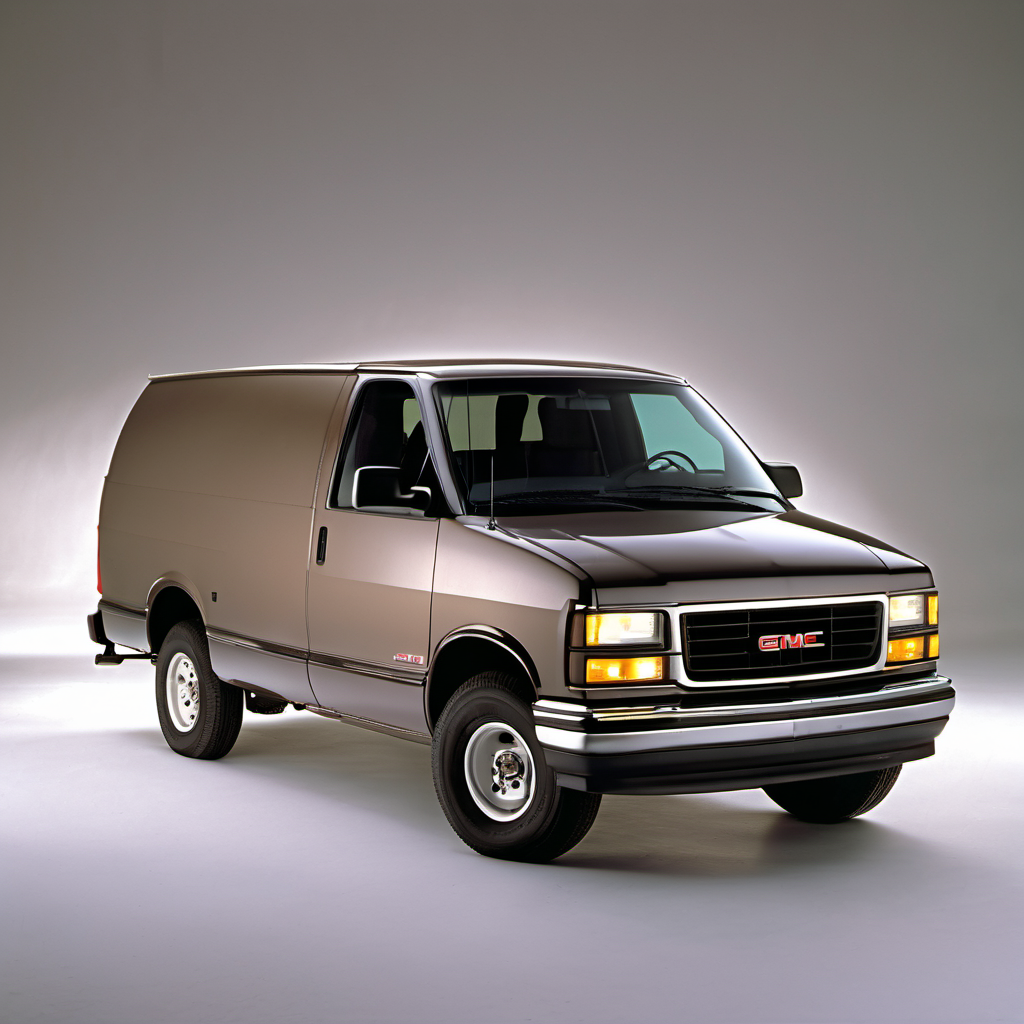
Mechanical twin to the Astro — identical drivetrain, frame, and platform. Parts are completely interchangeable. Only the badges and minor trim differ.

1995 Ford
Econoline E-150 Cargo

Full-size Ford cargo van of the same era. More cargo volume but a larger footprint; similarly affordable and parts-plentiful. RWD only, no AWD option.

1995 Dodge
Ram Van B150

Dodge's competitive cargo van of the era, also body-on-frame and RWD. 318 V8 is a common engine; similar repair costs and availability.

No catalog match
1995 Chevrolet
G20 Express Cargo

GM's own full-size cargo van alternative to the Astro. Larger interior and higher payload rating, same 4.3L or 5.7L V8 engine options, comparable ownership costs.

No catalog match

If you're shopping for one

Red flags
  • Any visible hole or soft spot in the frame rails — structural rust makes the van unsafe and uneconomical to repair
  • Milky or foamy oil on the dipstick — indicates coolant intrusion from a failed intake gasket, possibly with engine damage already done
  • Transmission that slips, hunts for gears, or delays engagement from park — rebuilds on a 30-year-old van can cost more than the vehicle's value
  • Evidence of R-12 refrigerant fittings that have never been converted — conversion adds cost and complicates future A/C work
  • Unknown AWD service history with noisy or binding front drivetrain components
  • Any seller who cannot provide at least a partial maintenance history on a high-mileage example
What to inspect
  • Frame rails from front crossmember to rear bumper — poke with a screwdriver; perforation is a deal-breaker on a body-on-frame vehicle
  • Rocker panels and rear wheel arches for bubbling paint hiding rust perforation
  • Lower intake manifold area for coolant weeping or oil with a milky appearance on the dipstick
  • AWD front axle actuator function — engage AWD at low speed and confirm front wheels pull
  • Condition of all rubber fuel and coolant hoses — cracking, swelling, or oil soaking means immediate replacement
  • Transmission engagement and smoothness through all gears, especially 1-2 shift quality under load
  • Underside of cargo floor for rust-through, especially near the spare tire well and rear doors
AI profile generated 13 days ago · claude-sonnet-4-6 · v2.