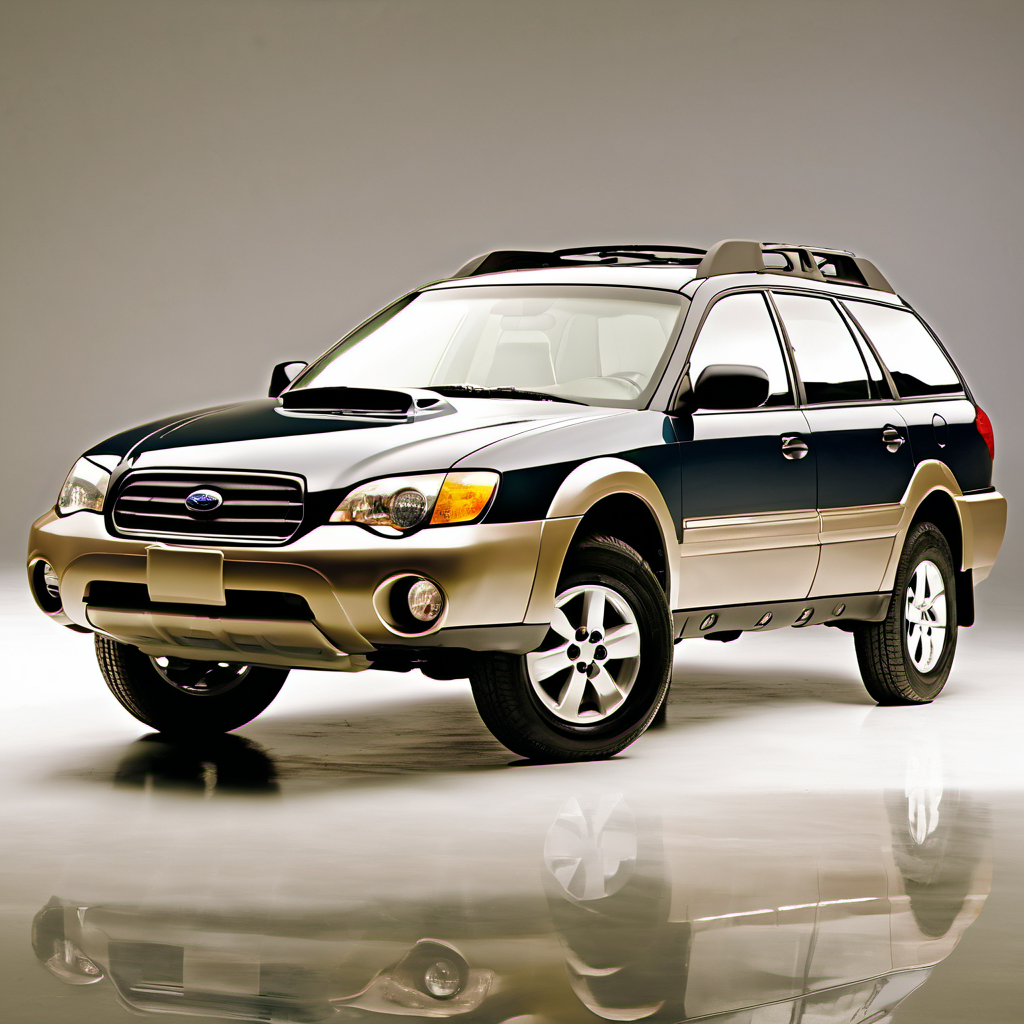
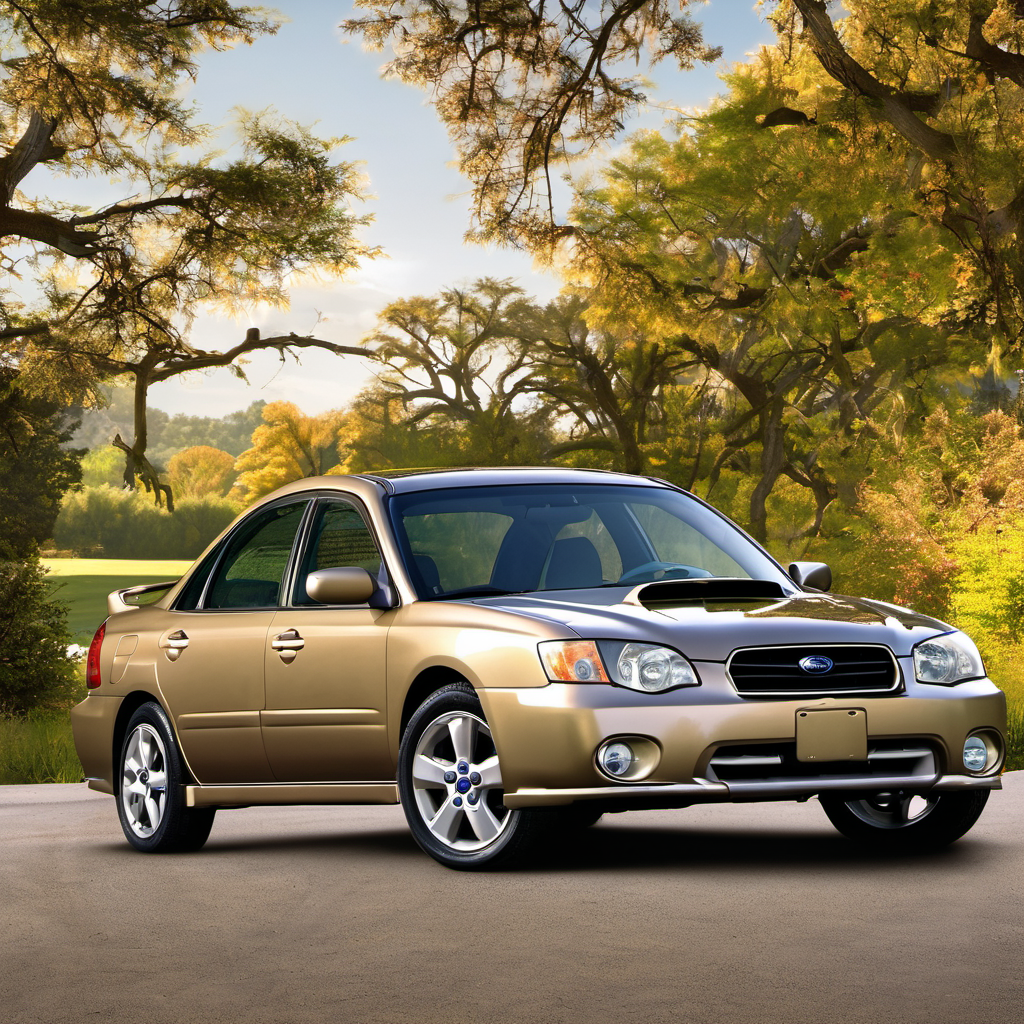
2004 Subaru Outback Sedan

2004 Subaru

OutbackSedan

2.5L H4 (EJ25) · Sedan

The 2004 Subaru Outback Sedan — officially the Outback Sport or Legacy Outback in wagon/sedan form — is the sedan variant of Subaru's beloved all-weather crossover. It combines the low-slung profile of a Legacy sedan with raised ride height, standard AWD, and Outback cladding. By 2004 it was well into its third generation, a mature platform known for its go-anywhere confidence in snow and rain. Powered by Subaru's signature horizontally-opposed (boxer) four-cylinder engine and paired with either a 5-speed manual or 4-speed automatic, it offers a practical, fuel-efficient package for Upper Midwest drivers who need AWD without the bulk of an SUV. The cabin is functional rather than plush, and interior materials show their age on most used examples by now. At 20 years old, this Outback is firmly in 'older used car' territory. The bones are solid if the head gaskets and timing belt have been addressed — those two items define whether this car is a bargain or a money pit. A well-maintained example with documented service history can still rack up miles reliably.

Reliability
3/5
Verified data
Engine
2.5L H4 (EJ25)
Drivetrain
AWD
Fuel
Gasoline
MPG
22 city / 28 hwy / 24 combined
Seats
5
Doors
4
Body
Sedan
MSRP
$24,995

Overview

AI-curated

The 2004 Subaru Outback Sedan — officially the Outback Sport or Legacy Outback in wagon/sedan form — is the sedan variant of Subaru's beloved all-weather crossover. It combines the low-slung profile of a Legacy sedan with raised ride height, standard AWD, and Outback cladding. By 2004 it was well into its third generation, a mature platform known for its go-anywhere confidence in snow and rain. Powered by Subaru's signature horizontally-opposed (boxer) four-cylinder engine and paired with either a 5-speed manual or 4-speed automatic, it offers a practical, fuel-efficient package for Upper Midwest drivers who need AWD without the bulk of an SUV. The cabin is functional rather than plush, and interior materials show their age on most used examples by now. At 20 years old, this Outback is firmly in 'older used car' territory. The bones are solid if the head gaskets and timing belt have been addressed — those two items define whether this car is a bargain or a money pit. A well-maintained example with documented service history can still rack up miles reliably.

Known for
  • Standard symmetrical AWD on every trim
  • Boxer engine character and low center of gravity
  • Strong snow and off-pavement capability for a sedan
  • Head gasket vulnerability on the EJ25 engine
  • Loyal, enthusiastic owner community
Best for
  • Wisconsin winter commuters who want AWD without an SUV
  • Buyers on a tight budget needing proven all-weather capability
  • DIY-friendly owners comfortable with older Japanese vehicles
  • Light trail and unpaved road use
Watch for
  • Head gasket failure on the 2.5L EJ25 — the #1 issue on this generation
  • Timing belt service history — interference engine, skipped belt = engine damage
  • Rust on frame rails, subframe, and rocker panels from road salt
  • Automatic transmission reliability if fluid has never been serviced
  • Leaking rear differential or transfer case on high-mileage examples

Common issues by mileage

6 known

Head Gasket Failure (EJ25 External Leak)

high
Typically appears
80–150k mi
Estimated repair
$1,400 – $2,200

Timing Belt & Water Pump Service (Interference Engine)

high
Typically appears
60–105k mi (every 105k or 7 yrs)
Estimated repair
$550 – $900

Oxygen Sensor / Heater Circuit Failure

medium
Typically appears
80–150k mi
Estimated repair
$150 – $350

Camshaft Position / VVT Timing Over-Retarded

medium
Typically appears
90–160k mi
Estimated repair
$200 – $600

Rear Wheel Bearing Wear

medium
Typically appears
100–160k mi
Estimated repair
$250 – $450

Rust on Subframe, Rocker Panels, and Frame Rails

high
Typically appears
Any mileage on salt-belt cars
Estimated repair
$300 – $2,500

Maintenance schedule

  1. 1
    Every 105k miles or 7 years, whichever comes first Timing belt, tensioner, idler, and water pump replacement

    This is an interference engine — a snapped belt destroys valves and pistons. On a 2004, most examples are overdue. Verify documentation before purchase and budget for it immediately if none exists.

  2. 2
    Every oil change — check coolant level, look for milky oil or exhaust smell from coolant reservoir Coolant system inspection and head gasket monitoring

    The EJ25 head gasket leaks externally first (coolant drips near cylinder 2 and 3). Catch it early and the repair is straightforward. Ignore it and you risk warping the head.

  3. 3
    Every 5,000 miles or 6 months Engine oil and filter change

    Subaru boxer engines are sensitive to oil quality and level. Low or dirty oil accelerates head gasket weeping and VVT solenoid sludging. Use a quality 5W-30.

  4. 4
    Every 30,000 miles AWD differential fluid service (front, rear, and transfer case)

    Neglected diff fluid causes AWD binding and premature clutch-pack wear. On a 20-year-old car, assume it's due unless documented otherwise.

  5. 5
    Every 30,000 miles on used examples Automatic transmission fluid drain and fill

    Factory interval was longer, but on a used car with unknown history, fresh ATF prevents shudder and slipping. Do not flush — drain and fill only.

  6. 6
    Every 30,000 miles Spark plugs replacement

    Boxer engines require removing the intake for full plug access. Labor adds up, so don't let this slide — fouled plugs cause misfires and hurt fuel economy.

  7. 7
    Every 2 years Brake fluid flush

    Subaru specifies this interval for good reason — hygroscopic fluid absorbs moisture and raises brake fade risk in hard stops. Road-salt exposure also accelerates caliper corrosion.

  8. 8
    Every fall before winter Undercarriage rust inspection and treatment

    Wisconsin road salt attacks the Outback's subframe mounting points, brake lines, and rocker seams. Annual inspection and touch-up with rust inhibitor can add years to the car's life.

Always defer to the manufacturer's service manual for warranty-mandated intervals.

Cost of ownership

Annual maintenance
$700 – $1,800
Fuel
At ~24 MPG combined and typical Wisconsin driving, expect roughly $1,800–$2,400/year at current fuel prices. Premium not required — regular 87 octane.
Insurance
Typically $900–$1,400/year for a 2004 model in Wisconsin depending on driver profile. Low vehicle value keeps comp/collision premiums modest.

A well-maintained 2004 Outback Sedan is one of the more affordable AWD vehicles to own day-to-day — fuel and insurance are both reasonable. The wildcard is deferred maintenance. If timing belt and head gaskets are already addressed, annual costs stay low. If they're not, budget $1,500–$3,000 in catch-up work upfront. Repair parts are inexpensive and widely available; independent shop labor rates apply well to this platform.
Seasonal care

Lake Geneva, WI
Winter
  • Test the battery before November — cold-cranking amps drop sharply below 20°F and this 2.5L boxer needs a strong battery to fire reliably. Replace any battery over 4 years old.
  • Switch to a 0W-30 or 5W-30 full synthetic if not already — thinner cold-start viscosity protects the engine during sub-zero mornings and reduces head gasket stress at startup.
  • Inspect brake lines and hard lines under the car each fall — salt-belt rust on 20-year-old brake lines is a safety hazard, not just an aesthetic issue.
  • Use winter-rated windshield washer fluid rated to at least -20°F. The reservoir is easy to check and refill; never use summer-mix in Wisconsin winters.
  • Fit a dedicated set of winter tires — AWD helps you go but does not help you stop. Four matching winter tires make a larger safety difference than any drivetrain.
  • Check and top off antifreeze to at least -34°F protection. On a car prone to coolant loss from head gaskets, monitor the reservoir level monthly through winter.
Summer
  • Check tire pressure after temperature swings — every 10°F of heat adds roughly 1 PSI. Overinflated tires on summer pavement reduce contact patch and increase wear.
  • Inspect the A/C system — 2004 refrigerant charge and condenser seals are 20+ years old. A/C recharge runs $100–$180 at an independent shop if it's low.
  • Watch for coolant temperature creep in stop-and-go traffic — a head gasket that's 'just weeping' in cool weather can accelerate to full failure under summer heat load.
  • Flush and inspect the cooling system, including the radiator cap seal — a weak cap allows the system to run at lower-than-spec pressure, raising the boiling point risk.

Comparable vehicles

If you're shopping for one

Red flags
  • No timing belt records and the seller can't confirm when it was done — walk away or heavily discount the price.
  • Milky oil or coolant with oily sheen — head gasket is actively failing; factor in $1,500–$2,200 repair minimum.
  • Overheating history, even once — a warped or cracked head is a possibility and repair costs escalate sharply.
  • Rust holes in the rocker panels, subframe, or floor — at 20 years old, salt-belt rust can make a Wisconsin car structurally unsound.
  • Mismatched tire sizes — running different diameter tires on AWD Subarus destroys the center differential.
  • Check engine light that the seller claims 'just came on' or is 'nothing serious' — on this platform, it rarely is nothing.
What to inspect
  • Pull the oil dipstick and radiator cap — look for milky, caramel-colored residue indicating coolant mixing with oil (head gasket failure sign).
  • Check the coolant overflow reservoir for oil sheen or brown sludge deposits.
  • Ask for timing belt replacement records specifically — get the date and mileage. If none, treat it as overdue.
  • Inspect underneath for active coolant drips near the back of the engine block, especially around cylinder 2 and 3 (passenger side on the EJ25).
  • Look at all four wheel wells and rocker panel seams from underneath with a flashlight — rust-through here is a structural concern on salt-belt cars.
  • Check subframe mounting points and rear trailing arm brackets for rust perforation — these are safety-critical and expensive to repair.
  • Test AWD function: on a dry, tight turn at low speed, feel for binding or clunking — this can indicate rear diff or transfer case wear.
  • Have a pre-purchase inspection done by a shop familiar with Subarus — 45 minutes on a lift can save you thousands.
AI profile generated 5 days ago · claude-sonnet-4-6 · v2.