1993 Ford Econoline E250 Cargo Van/Minivan

1993 Ford

Econoline E250 CargoVan/Minivan

5.8L V8 · Van/Minivan

The 1993 Ford Econoline E250 is a full-size cargo van built on Ford's long-running E-Series platform — a workhorse that served fleets, tradespeople, and small businesses for decades. By 1993 the platform was well-sorted, offering a choice of inline-6 or V8 gasoline engines with a simple, robust drivetrain that mechanics know inside and out. Parts are cheap, independent shops can handle virtually any repair, and the body-on-frame construction means structural fixes are straightforward even at high mileage. The E250 slots between the lighter E150 and the heavier-duty E350, rated for a GVWR that handles most commercial loads comfortably. The cargo-van configuration means no rear seats from the factory, giving an enormous, flat load floor ideal for tools, equipment, or conversion work. The 1993 model year predates OBDII, so diagnosis uses Ford's EEC-IV system — a scanner that reads Ford-specific codes is needed rather than a standard OBDII reader. At 30+ years old, every surviving example is a high-mileage veteran. Rust, deferred maintenance, and worn drivetrain components are the norm, not the exception. Budget accordingly, inspect thoroughly before buying, and expect this van to keep working reliably if the basics are kept up.

Reliability
3/5
Verified data
Engine
5.8L V8
Drivetrain
RWD
Fuel
Gasoline
MPG
12 city / 16 hwy / 13 combined
Seats
2
Doors
3
Body
Van
MSRP
$19,500

Overview

AI-curated

The 1993 Ford Econoline E250 is a full-size cargo van built on Ford's long-running E-Series platform — a workhorse that served fleets, tradespeople, and small businesses for decades. By 1993 the platform was well-sorted, offering a choice of inline-6 or V8 gasoline engines with a simple, robust drivetrain that mechanics know inside and out. Parts are cheap, independent shops can handle virtually any repair, and the body-on-frame construction means structural fixes are straightforward even at high mileage. The E250 slots between the lighter E150 and the heavier-duty E350, rated for a GVWR that handles most commercial loads comfortably. The cargo-van configuration means no rear seats from the factory, giving an enormous, flat load floor ideal for tools, equipment, or conversion work. The 1993 model year predates OBDII, so diagnosis uses Ford's EEC-IV system — a scanner that reads Ford-specific codes is needed rather than a standard OBDII reader. At 30+ years old, every surviving example is a high-mileage veteran. Rust, deferred maintenance, and worn drivetrain components are the norm, not the exception. Budget accordingly, inspect thoroughly before buying, and expect this van to keep working reliably if the basics are kept up.

Known for
  • Extremely durable body-on-frame construction
  • Simple EEC-IV engine management — easy to diagnose and repair
  • Massive cargo capacity for a van of its era
  • Wide parts availability and low parts cost
  • Strong towing and hauling capability for a 3/4-ton van
Best for
  • Tradespeople and contractors needing a rolling workshop
  • Owners comfortable with basic mechanical upkeep
  • Budget-conscious buyers who want a capable work van
  • Camper or cargo conversion projects
Watch for
  • Frame and floor rust — critical in Midwest salt-belt states
  • EEC-IV system requires Ford-specific diagnostic tools, not standard OBDII
  • Fuel system components (injectors, fuel pump) aged 30+ years
  • Deferred fleet maintenance history is common on these vans
  • Brake system wear — drums, wheel cylinders, and brake lines corrode badly

Common issues by mileage

6 known

Fuel pump failure

high
Typically appears
100–200k mi
Estimated repair
$350 – $650

Brake line rust and failure

high
Typically appears
Any mileage on salt-belt vehicles
Estimated repair
$400 – $1,200

EGR system clogging and EEC-IV sensor faults

high
Typically appears
80–150k mi
Estimated repair
$150 – $500

Transmission fluid degradation / E4OD shift problems

medium
Typically appears
100–180k mi
Estimated repair
$200 – $2,800

Coolant hose and radiator leaks

high
Typically appears
Any on a 30-year-old vehicle
Estimated repair
$80 – $600

Rear wheel cylinder and drum brake wear

high
Typically appears
80k+ mi
Estimated repair
$150 – $450

Maintenance schedule

  1. 1
    Every 3,000–4,000 miles (conventional oil recommended for this era engine) Engine oil and filter change

    The 5.8L Windsor predates modern oil formulations. Shorter intervals protect worn rings and older bearing clearances.

  2. 2
    Every 30,000 miles or if fluid smells burnt Transmission fluid and filter service

    The AOD or E4OD in these vans is durable but suffers badly from neglected fluid. A simple pan-drop service is cheap insurance against a $2,000+ rebuild.

  3. 3
    Inspect annually; replace if cracked or soft Inspect and replace all rubber fuel lines

    30-year-old rubber fuel lines are a fire hazard. This is not optional on any vehicle this age.

  4. 4
    Every spring after winter salt exposure Brake line inspection for rust

    Steel brake lines on Wisconsin-driven vehicles corrode from the outside in. A line failure at speed is catastrophic. Catch it before it fails.

  5. 5
    Every 2 years or 30,000 miles Coolant flush and hose inspection

    Old coolant becomes acidic and attacks the aluminum intake and heater core. Replace all hoses proactively at this vehicle age.

  6. 6
    Every 30,000 miles Spark plugs and distributor cap/rotor

    The EEC-IV system has no coil-on-plug redundancy — a worn distributor cap or fouled plugs causes immediate driveability problems.

  7. 7
    Every fall before winter season Battery load test

    A marginal battery that starts fine in summer will fail at -10°F. The 5.8L has high cranking demands. Don't gamble on a battery over 3 years old.

  8. 8
    Every 6,000 miles Grease all chassis zerk fittings (steering, driveshaft)

    The body-on-frame chassis has multiple grease points. Neglected ball joints and U-joints are a common cause of handling problems and sudden failure on these vans.

Always defer to the manufacturer's service manual for warranty-mandated intervals.

Cost of ownership

Annual maintenance
$800 – $2,500
Fuel
At 13 MPG combined and current regional gas prices, expect $2,500–$3,500/year for moderate driving (15,000 miles). Heavy hauling or idling will push this higher.
Insurance
Typically low — liability/commercial-use policies on cargo vans this age run $600–$1,200/year depending on use and driving record. Comprehensive coverage on a 30-year-old work van is often not cost-effective.

This van is cheap to insure and cheap to fix when parts are needed — but at 30+ years old, it will need parts regularly. Budget a meaningful maintenance reserve each year. The big risks are deferred items: brake lines, fuel system, and cooling system. Catch those proactively and the annual cost stays manageable. Let them go and one repair bill can exceed the van's market value.

Seasonal care

Lake Geneva, WI
Winter
  • Load-test the battery every fall — the 5.8L V8 draws heavy current at cold cranks and a weak battery will leave you stranded.
  • Switch to a 5W-30 conventional oil if not already using it; thinner cold-start viscosity reduces wear during sub-zero starts.
  • Inspect brake lines top to bottom before winter. Salt spray accelerates rust on exposed steel lines and a failure in icy conditions is catastrophic.
  • Fill the washer fluid reservoir with a -25°F or lower rated fluid — the large windshield on this van ices up fast and washer lines will freeze with summer fluid.
  • Check antifreeze concentration to at least -34°F with a refractometer; a 30-year-old cooling system is prone to silently diluting coolant.
  • Inspect and treat the undercarriage with a rust-inhibiting spray before the first salt application of the season — the frame and floor of these vans are particularly vulnerable.
Summer
  • Check tire pressure monthly — the cargo van's high load rating and large tire size lose pressure quickly with summer heat, and overloaded tires run hot.
  • Inspect the A/C system for refrigerant leaks; the 1993 E250 uses R-12 refrigerant, which is expensive and limited in supply. A retrofit to R-134a may be worthwhile if the system needs a recharge.
  • Check coolant level and look for weeping hoses before long trips — heat soak in stop-and-go with a load will push a marginal cooling system over the edge.
  • Inspect the serpentine/V-belts for cracking; summer heat accelerates rubber degradation on a van that may already have aged belts.

Comparable vehicles

1993 Chevrolet
G20 Van

Direct competitor in the 3/4-ton full-size cargo van segment. Similar body-on-frame construction, comparable V8 powertrains, and the same era of GM TBI or TPI fuel injection. Parts equally cheap and plentiful.

No catalog match
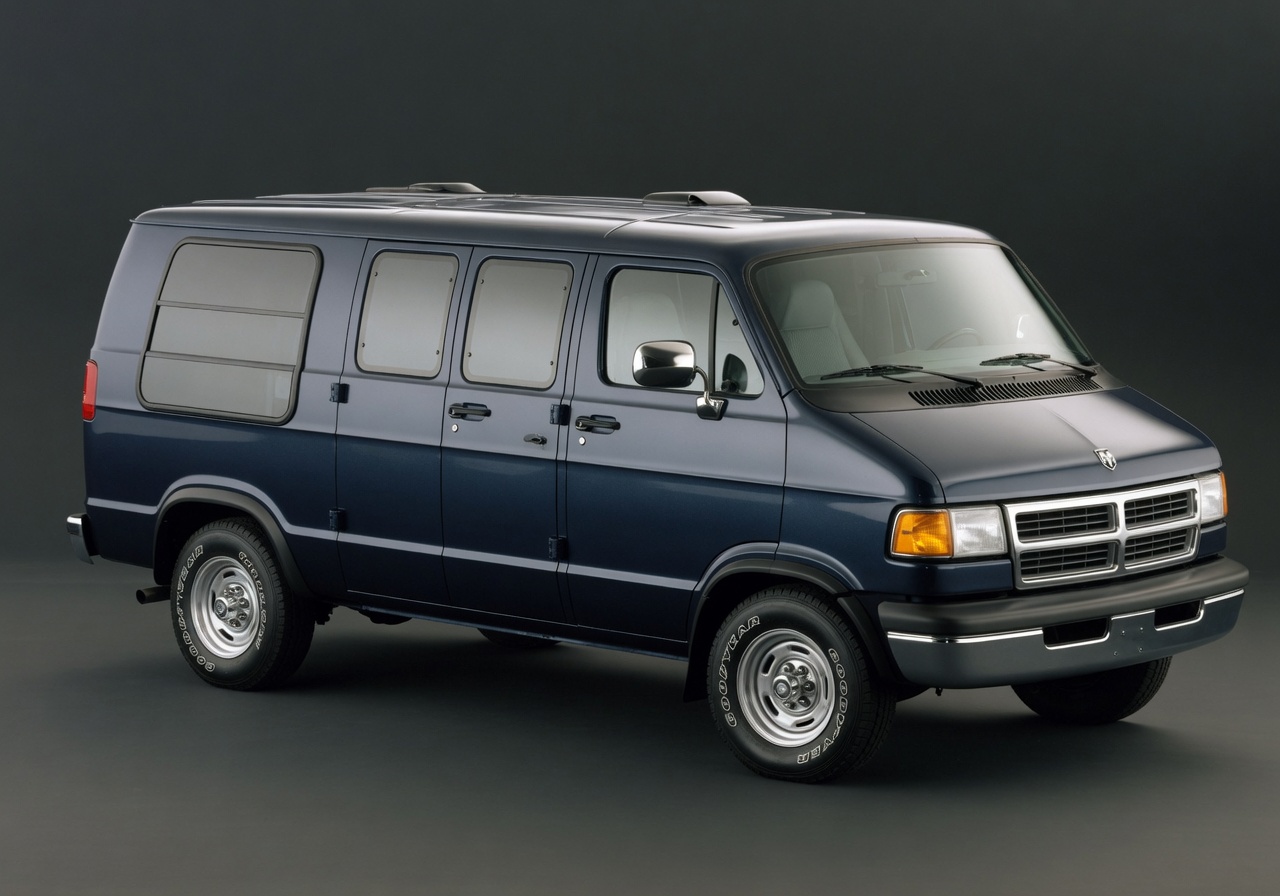
1993 Dodge Ram Van B250
1993 Dodge
Ram Van B250

Dodge's 3/4-ton cargo van of the same era. LA-series 318 V8 is similarly proven and affordable to maintain. Slightly different ergonomics but same mission and price bracket.

1995 Ford Econoline E250
1995 Ford
Econoline E250

A slightly newer example of the same platform gives you a cleaner chassis, fewer age-related failures, and easier emissions compliance — worth considering if the 1993 needs extensive work.

1993 GMC
Vandura G2500

GMC's badge-equivalent to the Chevy G20 — same platform, same engines, same durability profile. Often priced identically and just as easy to find parts for in the Midwest.

No catalog match

If you're shopping for one

Red flags
  • Any soft, swollen, or cracked rubber fuel lines — immediate fire risk, walk away or price in a full fuel system replacement.
  • Brake pedal that pulses, sinks, or feels spongy — likely corroded lines or failed wheel cylinders, and on a van this heavy, non-negotiable.
  • Frame rust that goes beyond surface scale into actual perforation or cracking — structural repair on a body-on-frame van this age is rarely economical.
  • Transmission that slips, hesitates, or bangs into gear — E4OD rebuilds can exceed the van's market value.
  • Blue smoke at startup or under load — worn rings or valve seals mean an engine that's burning oil heavily.
  • No maintenance records and odometer reading that seems too low for a 30-year-old work van — tampered odometers and zero-history fleet vehicles are a gamble.
What to inspect
  • Put the van on a lift and walk the entire underframe — look for rust perforation on the frame rails, floor pans, and brake lines specifically.
  • Pull the oil filler cap and check for white mayo-like residue (head gasket coolant intrusion), common on high-mileage 5.8L engines.
  • Test drive under load if possible — listen for transmission slippage, shudder on shifts, or delayed engagement from park to drive.
  • Check all four corners of the cargo floor from inside for rust-through — water pools in cargo vans and the floor is often the first casualty.
  • Have a Ford-capable scanner pulled on the EEC-IV system to read any stored codes before purchase.
  • Inspect the distributor cap, rotor, and spark plug wires — worn ignition components are a cheap fix but a sign of deferred maintenance overall.
  • Verify the A/C system type (R-12 vs already converted to R-134a) — unconverted R-12 systems are costly to recharge.
AI profile generated 4 days ago · claude-sonnet-4-6 · v2.