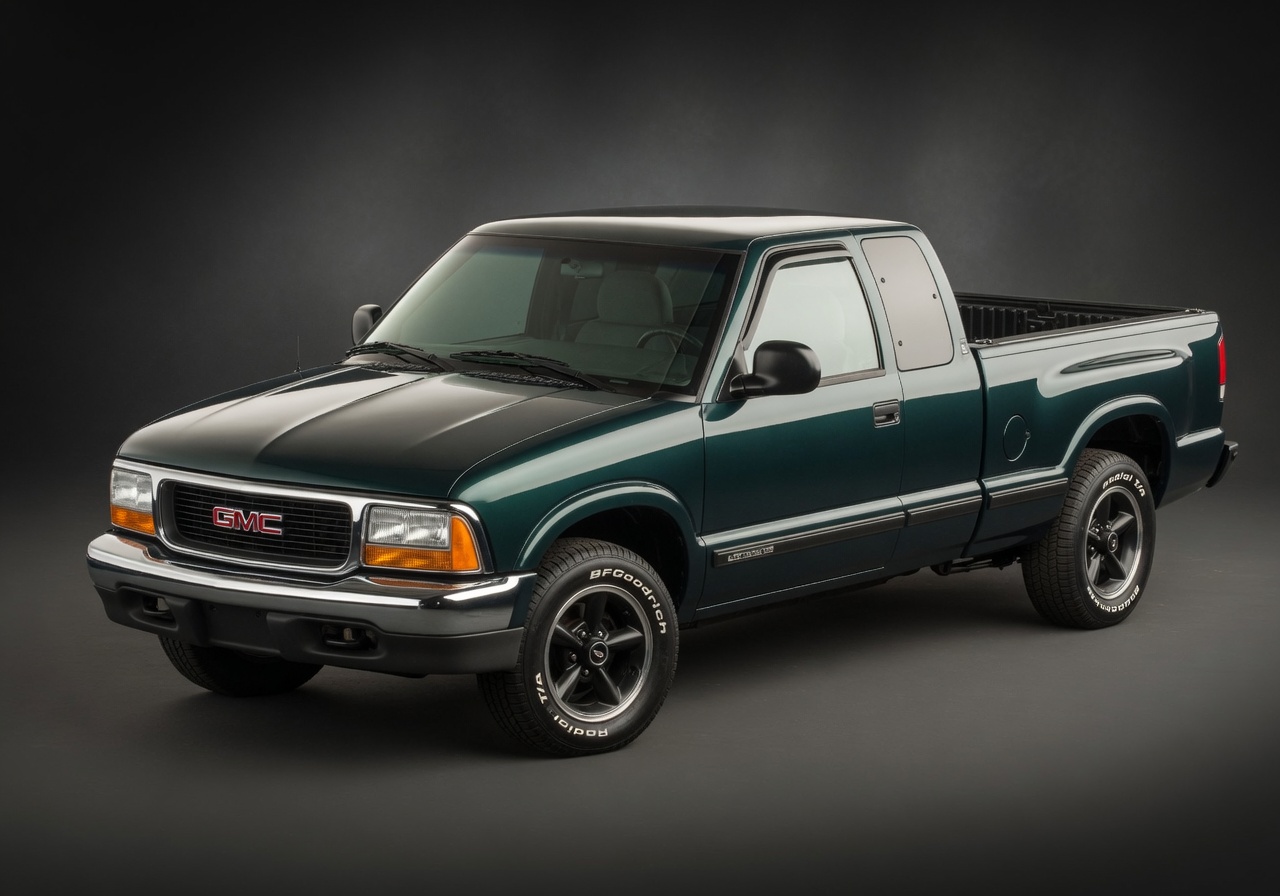
1996 GMC Sonoma Club Coupe Cab Pickup

1996 GMC

Sonoma Club Coupe CabPickup

4.3L V6 (Vortec) · Pickup

The 1996 GMC Sonoma Club Coupe Cab is a compact pickup truck from GM's S-Series platform, sharing its bones with the Chevrolet S-10. The Club Coupe body adds a small rear jump-seat area behind the front bench, giving it more versatility than the standard two-seat regular cab. By 1996 the Sonoma was a mature design — comfortable, relatively simple to wrench on, and widely supported by aftermarket parts. Powertrain options included a 2.2L four-cylinder or the optional 4.3L V6, with both manual and automatic transmissions available. These trucks were popular workhorses and weekend haulers. At nearly 30 years old now, the main concerns are rust, worn suspension, and aging fuel system components rather than any exotic engineering problem. For a Lake Geneva buyer, rust is the defining issue. Wisconsin road salt has had nearly three decades to work on these trucks. A clean, rust-free example is genuinely rare and worth paying extra for. A rusty one can become a money pit quickly.

Reliability
3/5
Verified data
Engine
4.3L V6 (Vortec)
Drivetrain
RWD
Fuel
Gasoline
MPG
16 city / 21 hwy / 18 combined
Seats
3
Doors
2
Body
Pickup
MSRP
$14,500

Overview

AI-curated

The 1996 GMC Sonoma Club Coupe Cab is a compact pickup truck from GM's S-Series platform, sharing its bones with the Chevrolet S-10. The Club Coupe body adds a small rear jump-seat area behind the front bench, giving it more versatility than the standard two-seat regular cab. By 1996 the Sonoma was a mature design — comfortable, relatively simple to wrench on, and widely supported by aftermarket parts. Powertrain options included a 2.2L four-cylinder or the optional 4.3L V6, with both manual and automatic transmissions available. These trucks were popular workhorses and weekend haulers. At nearly 30 years old now, the main concerns are rust, worn suspension, and aging fuel system components rather than any exotic engineering problem. For a Lake Geneva buyer, rust is the defining issue. Wisconsin road salt has had nearly three decades to work on these trucks. A clean, rust-free example is genuinely rare and worth paying extra for. A rusty one can become a money pit quickly.

Known for
  • Durable 4.3L V6 engine option with strong torque for its class
  • Simple, mechanic-friendly body-on-frame construction
  • Wide parts availability due to shared S-10 platform
  • Compact size that makes city and tight-space maneuvering easy
Best for
  • Light-duty hauling and occasional towing
  • Buyers comfortable doing their own maintenance
  • Secondary or weekend-use truck owners
  • Those needing a compact pickup on a tight budget
Watch for
  • Frame and rocker panel rust — endemic in Midwest examples
  • Fuel pump failure inside the tank (high failure rate on this generation)
  • Worn or cracked lower ball joints, a documented safety concern
  • Automatic transmission durability on V6 models pushed hard
  • Distributor wear and ignition module failures on the 4.3L V6

Common issues by mileage

6 known

Fuel pump failure (in-tank)

high
Typically appears
80–150k mi
Estimated repair
$350 – $600

Spider injector / CSFI fuel injector failure (4.3L V6)

high
Typically appears
80–130k mi
Estimated repair
$400 – $700

Lower ball joint wear

high
Typically appears
60–120k mi
Estimated repair
$250 – $500

Distributor cap, rotor, and ignition control module failure (4.3L)

medium
Typically appears
60–100k mi
Estimated repair
$150 – $350

Rust-through on frame, rockers, and brake lines

high
Typically appears
Any — age-driven in Midwest
Estimated repair
$500 – $3,000

Automatic transmission slipping or failure (4L60-E)

medium
Typically appears
100–160k mi
Estimated repair
$1,200 – $2,500

Maintenance schedule

  1. 1
    Annually or at every brake service Inspect and flush brake lines and fittings

    Steel brake lines corrode and fail from the inside out on Midwest trucks. A blown brake line is a safety emergency. Look at every inch underneath.

  2. 2
    Every 30k mi Replace fuel filter

    A clogged filter kills fuel pumps prematurely. At 30 years old, a fresh filter is cheap insurance against an expensive pump job.

  3. 3
    Every 30k mi or annually Inspect lower ball joints and tie rod ends

    Lower ball joints are a documented failure point on this generation. A failed ball joint can cause loss of vehicle control.

  4. 4
    Every 30k mi Service the distributor cap, rotor, and ignition wires

    The 4.3L distributer is exposed and prone to moisture ingress. Fresh cap/rotor and wires prevent hard starts and misfires.

  5. 5
    Every 5,000 mi or 6 months Change engine oil and filter

    Short trips common to daily driving never fully warm the oil. More frequent changes prevent sludge in a 30-year-old engine.

  6. 6
    Every oil change Inspect and re-grease chassis fittings (zerk fittings)

    The Sonoma has greaseable suspension joints. Keeping them packed extends life dramatically and is a 10-minute job.

  7. 7
    Every 2 years Flush and refill coolant

    Older Dex-Cool or green coolant degrades and causes scale buildup in the 4.3L. A clean cooling system prevents head gasket strain.

  8. 8
    Annually, before winter Inspect and undercoat exposed frame sections

    At this age, proactive rust inhibitor on clean metal is the single best investment for long-term survival in Wisconsin.

Always defer to the manufacturer's service manual for warranty-mandated intervals.

Cost of ownership

Annual maintenance
$600 – $1,800
Fuel
Expect 16–18 MPG in mixed Lake Geneva driving with the 4.3L V6. Budget around $2,000–$2,800/year at current fuel prices for average mileage.
Insurance
Typically low — liability and collision on a 30-year-old compact truck is inexpensive. Expect $600–$1,100/year depending on coverage and driver profile.

Day-to-day costs are modest if the truck is rust-free and mechanically sound. The real wildcard is deferred maintenance and rust remediation on a nearly 30-year-old Wisconsin vehicle. Budget more in the first year to address brake lines, suspension, and seals. A truck in good shape is genuinely cheap to run; one hiding rust problems can easily cost $3,000–$5,000 to make safe.
Seasonal care

Lake Geneva, WI
Winter
  • Flush washer fluid reservoir and lines completely — fill with -20°F or lower rated fluid to prevent freezing and cracked reservoir
  • Test battery load (at 30 years old this truck has likely had several batteries — cold cranking amps drop fast in sub-zero temps; replace any battery showing weakness before November)
  • Switch to a lower-viscosity oil (e.g., 5W-30) if running heavier summer-weight oil, for easier cold starts
  • Inspect rubber fuel lines, brake hoses, and vacuum lines for brittleness — cold cracking of aged rubber is common
  • Apply fresh rust inhibitor spray to exposed frame rails, wheel wells, and rocker panels before first salt exposure
  • Install quality winter wiper blades — standard blades pack with ice and streak; beam-style blades work better on an older curved windshield
Summer
  • Check A/C system operation — R-134a systems from this era can lose charge through aging o-rings; a weak A/C compressor is common at this age
  • Inspect coolant level and hoses for swelling or cracking — heat soak accelerates deterioration of original or older replacement hoses
  • Check tire pressure monthly — summer heat raises pressure by 4–6 PSI and can mask an under-inflated tire condition from winter
  • Inspect the battery again — heat is actually harder on batteries than cold; a marginal battery often fails in July, not January
  • Check power steering fluid level and inspect the hose from the pump — heat makes pinhole leaks in aged hoses weep faster

Comparable vehicles

If you're shopping for one

Red flags
  • Any visible frame rust through — not surface rust, but actual holes or flex in the frame steel
  • Soft or spongy brake pedal — could mean a rusted line ready to blow
  • Fresh undercoating sprayed over the frame — a common trick to hide rust before a sale
  • Check engine light on at purchase with no explanation from the seller
  • Evidence of oil leaks pooling on the valve cover gaskets or rear main seal area
  • Clunking or popping from the front suspension over bumps — ball joints or worn control arm bushings
What to inspect
  • Get completely under the truck and look at every frame rail, crossmember, and body mount — poke suspect spots with a screwdriver, not just your eyes
  • Inspect all four brake lines from the master cylinder to the wheels; pinhole rust is a showstopper
  • Check the cab corners, rocker panels, and floor pan from inside by pulling back any floor mats
  • Start the 4.3L cold and listen for ticking lifters or a rough idle (signs of spider injector wear or oil pressure issues)
  • Test drive includes hard acceleration to check for transmission slipping or harsh shifts on the 4L60-E
  • Grab each front wheel at 9 and 3 o'clock, then 12 and 6 — feel for play indicating ball joint or tie rod wear
AI profile generated 5 days ago · claude-sonnet-4-6 · v2.