1996 MAZDA

B-Series Regular CabPickup

2.3L I4 · Pickup

The 1996 Mazda B-Series Regular Cab is a compact pickup truck that shares its platform and mechanicals with the Ford Ranger of the same era — a product of Mazda's long partnership with Ford. Under the skin it's essentially a Ranger with Mazda badging and a few trim differences. That means proven, simple running gear, easy parts availability, and a large knowledge base at independent shops. The B2300 (2.3L 4-cyl) and B3000 (3.0L V6) were the two most common powertrains in 1996, with the B4000 (4.0L V6) rounding out the lineup. All engines were carryovers from Ford and have well-documented service histories. The 5-speed manual or 4-speed automatic transmissions are similarly straightforward. At nearly 30 years old, any surviving B-Series should be evaluated honestly for rust, deferred maintenance, and worn suspension components. These trucks were workhorses, not pampered garage queens. A well-cared-for example can still be a reliable, cheap-to-run light hauler — but a neglected one can become a money pit quickly.

Reliability
3/5
Verified data
Engine
2.3L I4
Drivetrain
RWD
Fuel
Gasoline
MPG
23 city / 26 hwy / 24 combined
Seats
2
Doors
2
Body
Pickup
MSRP
$11,500

Overview

AI-curated

The 1996 Mazda B-Series Regular Cab is a compact pickup truck that shares its platform and mechanicals with the Ford Ranger of the same era — a product of Mazda's long partnership with Ford. Under the skin it's essentially a Ranger with Mazda badging and a few trim differences. That means proven, simple running gear, easy parts availability, and a large knowledge base at independent shops. The B2300 (2.3L 4-cyl) and B3000 (3.0L V6) were the two most common powertrains in 1996, with the B4000 (4.0L V6) rounding out the lineup. All engines were carryovers from Ford and have well-documented service histories. The 5-speed manual or 4-speed automatic transmissions are similarly straightforward. At nearly 30 years old, any surviving B-Series should be evaluated honestly for rust, deferred maintenance, and worn suspension components. These trucks were workhorses, not pampered garage queens. A well-cared-for example can still be a reliable, cheap-to-run light hauler — but a neglected one can become a money pit quickly.

Known for
  • Shared Ford Ranger platform with widely available parts
  • Simple, easy-to-work-on mechanicals
  • Durable 4.0L OHV V6 in B4000 trim
  • Good towing and payload for a compact truck
Best for
  • Budget-conscious light-duty hauling
  • DIY owners comfortable with older, simpler vehicles
  • Around-town and rural errands
  • Buyers wanting a small truck with broad parts support
Watch for
  • Frame and rocker panel rust — especially critical in Wisconsin salt country
  • Age-related rubber deterioration: hoses, belts, seals
  • Neglected timing belt/chain service on high-mileage examples
  • Automatic transmission wear on 4-speed units past 100k mi
  • Cooling system neglect leading to head gasket issues on 3.0L V6

Common issues by mileage

6 known

Frame and body rust

high
Typically appears
All mileages — age-driven
Estimated repair
$500 – $4,000

Automatic transmission slipping or failure (4R44E/4R55E)

high
Typically appears
100k–160k mi
Estimated repair
$1,200 – $2,800

Cooling system failure / head gasket (3.0L V6)

medium
Typically appears
90k–150k mi
Estimated repair
$900 – $2,200

EGR valve clogging and rough idle

high
Typically appears
80k–130k mi
Estimated repair
$150 – $400

Worn front ball joints and tie rod ends

high
Typically appears
80k+ mi
Estimated repair
$250 – $700

Oxygen sensor failure (aging wiring and sensor degradation)

medium
Typically appears
80k–120k mi
Estimated repair
$100 – $300

Maintenance schedule

  1. 1
    Every 3,000–5,000 mi (conventional oil recommended for this age) Engine oil and filter change

    Older engine seals and tolerances benefit from more frequent changes; sludge buildup accelerates wear on high-mileage units.

  2. 2
    Every 2 years or 30,000 mi Coolant flush and thermostat inspection

    The 3.0L is sensitive to cooling system neglect. Fresh coolant prevents corrosion in the aluminum heads and prevents freeze damage in Wisconsin winters.

  3. 3
    Inspect every year; replace every 60,000 mi or at first cracking Serpentine and accessory belt inspection/replacement

    Rubber belts age from heat and ozone regardless of mileage. A snapped belt leaves you stranded.

  4. 4
    Every 12 months or 15,000 mi Front suspension inspection (ball joints, tie rods, wheel bearings)

    Solid-axle front ends on 4WD and the twin-I-beam on 2WD both wear predictably. Catching it early is a $250 job; ignoring it becomes a $1,000+ job.

  5. 5
    Every 2 years Brake fluid flush

    Moisture-absorbed brake fluid lowers boiling point and corrodes calipers and wheel cylinders from the inside — a particular problem on older vehicles.

  6. 6
    Every 30,000 mi Fuel filter replacement

    The in-line fuel filter on these trucks is inexpensive and easy to access. A clogged filter starves the fuel pump and causes premature pump failure.

  7. 7
    Every fall before road salt season Undercarriage rust inspection and treatment

    Wisconsin road salt is the primary killer of B-Series frames. Annual inspection catches bubbling before it becomes structural. Treat exposed metal with rust inhibitor each fall.

  8. 8
    Every 30,000 mi Spark plugs and ignition wires

    Original-style copper plugs and aging plug wires on a 30-year-old truck misfire easily in cold starts. Fresh plugs and wires improve cold-weather reliability and fuel economy.

Always defer to the manufacturer's service manual for warranty-mandated intervals.

Cost of ownership

Annual maintenance
$600 – $1,800
Fuel
At ~24 MPG combined (2.3L), expect roughly $1,400–$1,700/yr at 12,000 miles depending on gas prices. The 4.0L V6 drops to ~18 MPG combined, pushing that closer to $1,900–$2,200/yr.
Insurance
Liability-only coverage on a 1996 truck typically runs $400–$700/yr in the Lake Geneva area. Full coverage rarely makes economic sense at this vehicle's value.

A well-maintained B-Series can be genuinely cheap to own — parts are plentiful and inexpensive, and most repairs are DIY-friendly. The wildcard is rust and deferred maintenance. Budget $600–$1,000/yr for routine upkeep on a solid truck; plan for $1,500–$3,000 in catch-up repairs if purchasing a neglected example. At current used values, a major mechanical repair can easily exceed the truck's market value — know what you're buying.

Seasonal care

Lake Geneva, WI
Winter
  • Test the battery before first hard freeze — cold cranking amps drop sharply below 20°F and a marginal battery that starts fine in October will fail in January.
  • Switch to a 5W-30 or 0W-30 oil weight if using conventional oil to ensure fast cold-start lubrication in sub-zero temperatures.
  • Inspect and replace wiper blades with winter-rated blades; use -20°F or colder rated washer fluid — standard fluid freezes on the windshield at Wisconsin temps.
  • Flush and refill the cooling system with a 50/50 mix verified good to at least -34°F; a neglected cooling system can freeze and crack the block.
  • Rinse the undercarriage thoroughly after every heavy road-salt event — pay special attention to the frame rails, rocker panels, and brake lines, which are rust attack points on these trucks.
  • Check 4WD engagement (if equipped) before you need it — hubs and transfer case linkage can seize from disuse; work them through their range in a safe area early in the season.
Summer
  • Inspect the A/C system — refrigerant leaks are common on 30-year-old systems; recharging a leaking system without fixing the leak is money wasted.
  • Check tire pressure monthly; heat causes pressure to rise approximately 1 PSI per 10°F increase in ambient temperature, which can lead to overinflation and uneven wear.
  • Monitor coolant temperature closely during highway driving or towing in heat — the 3.0L V6 in particular is sensitive to marginal cooling system performance.
  • Inspect rubber hoses and belts after winter — freeze/thaw cycles accelerate cracking and brittleness.

Comparable vehicles

1996 Ford Ranger Regular Cab
1996 Ford
Ranger Regular Cab

Mechanically identical — same platform, engines, and transmissions. Often slightly cheaper to buy because of higher supply, with the exact same parts interchangeability.

1996 Toyota
Pickup Regular Cab

The Toyota compact truck of the same era is legendary for rust resistance and engine longevity. Often priced higher used, but strong competition in this segment.

No catalog match
1996 Nissan
Hardbody Regular Cab

Similar compact-truck mission and price range. Known for durable engines, though rust on the body and frame is a shared concern in the Midwest.

No catalog match
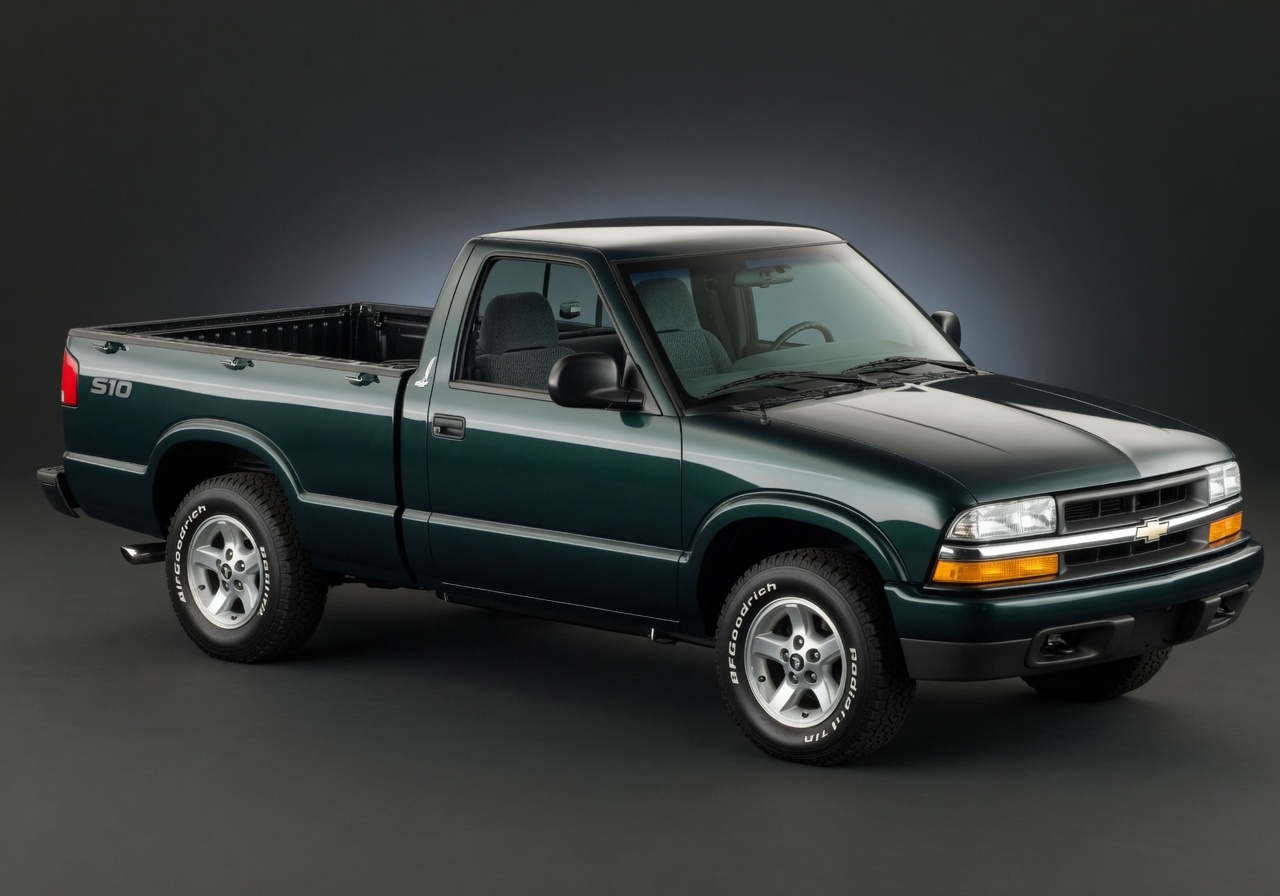
1996 Chevrolet S-10 Regular Cab
1996 Chevrolet
S-10 Regular Cab

GM's entry in the compact truck segment. Similar size and payload, with a large parts network. The 4.3L V6 option makes it a step up in power versus the B-Series.

If you're shopping for one

Red flags
  • Any soft spots, flaking, or bubbling on the frame rails under the cab and bed — this is a safety issue, not just cosmetic
  • Rust through the rocker panels or floor pan, which signals the truck has lived a hard Wisconsin life
  • Automatic transmission that hesitates, slips, or clunks between gears — rebuild or replacement is likely needed
  • White smoke from the exhaust on a warm engine, which points to a blown head gasket (common on neglected 3.0L engines)
  • Fresh undercoating sprayed on the frame — a common seller tactic to hide rust; probe through it if possible
  • Missing or illegible VIN tags or signs of odometer tampering on an obvious high-mileage truck
What to inspect
  • Full undercarriage inspection with the truck on a lift — frame, brake lines, fuel lines, and exhaust all corrode badly on Midwest trucks
  • Front ball joints and tie rod ends for play (grab the tire at 9 and 3 o'clock and 6 and 12 o'clock and shake — any clunking or movement needs attention)
  • Cooling system: check for milky oil or a sweet smell from the coolant overflow, which indicates head gasket leakage
  • Engine oil condition: pull the dipstick and look for grey/milky color (coolant contamination) or gritty feel (neglected changes)
  • 4WD engagement if equipped: test both 4-Hi and 4-Lo in a safe area and confirm clean engagement and disengagement
  • Check for oil leaks around the valve cover gaskets, rear main seal, and power steering hoses — all common at this age
AI profile generated 7 days ago · claude-sonnet-4-6 · v2.