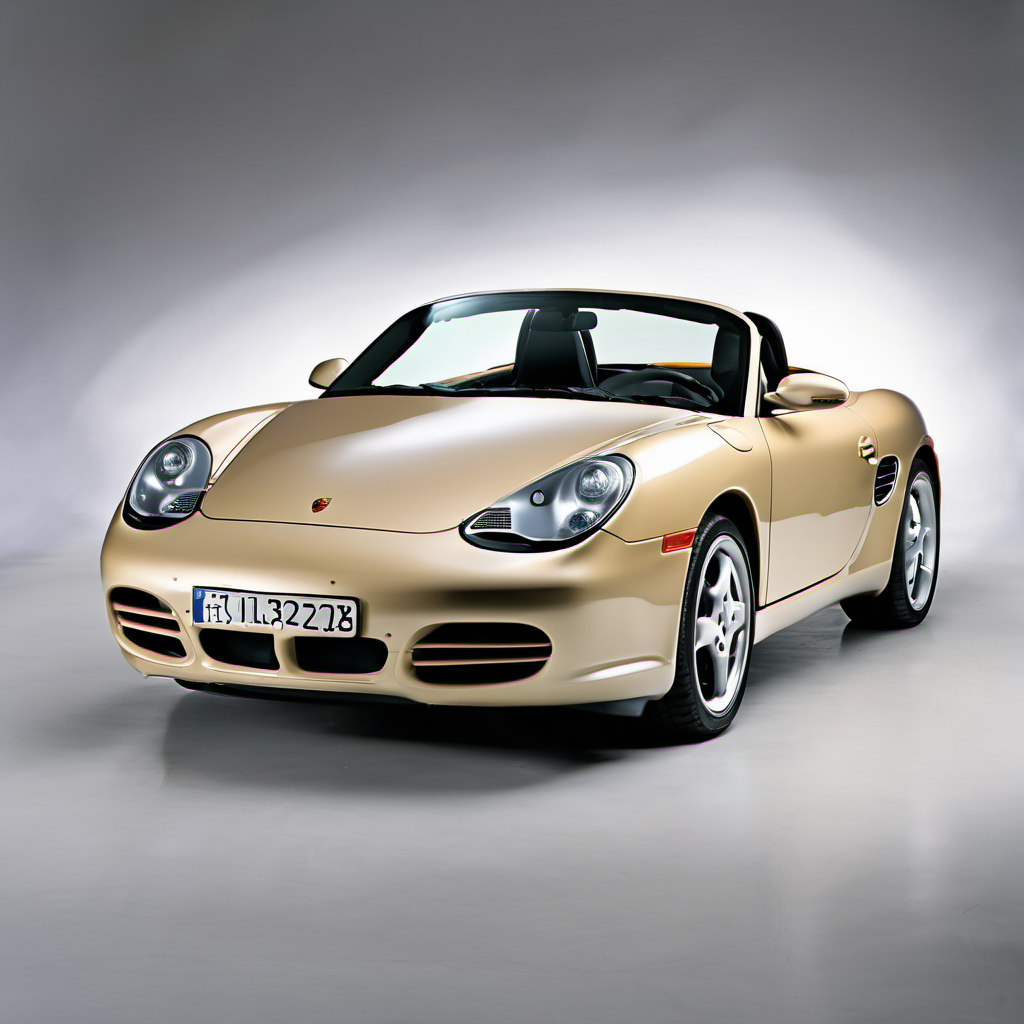
2003 Porsche Boxster Convertible

2003 Porsche

BoxsterConvertible

Convertible

The 2003 Porsche Boxster is the second model year of the 986-generation facelift, wearing revised headlights and bumpers that addressed early critics. Powered by a mid-mounted 2.7L flat-six, it's a genuine sports car that rewards drivers with near-perfect 50/50 weight distribution, crisp steering, and a sonorous exhaust note. At 20 years old, these cars have settled firmly into the enthusiast-ownership tier — meaning you're buying both the experience and the maintenance responsibility. The 986 Boxster's defining virtue is its chassis. Few cars at any price deliver this level of feedback and balance, and the mid-engine layout makes it genuinely forgiving in the wet when driven with care. The base 2.7L produces 228 hp and motivates the light (2,877 lb) roadster convincingly, while the optional 5-speed manual or Tiptronic automatic both pair well with the engine's broad power band. Ownership at this age demands honesty: the intermediate shaft (IMS) bearing is a known structural weakness in the M96 flat-six that can cause catastrophic engine failure without warning. Budget for an IMS retrofit and a pre-purchase inspection by a Porsche-familiar independent shop before committing. Done right, these are thoroughly enjoyable, road-trip-capable sports cars that can last well past 150k miles.

Reliability
3/5
Verified data
Specs shown for Boxster — the most common configuration. Other trims may vary in engine, drivetrain, or fuel economy. Sign in to see your vehicle's exact specs.
Engine
[object Object]
Drivetrain
RWD
Fuel
Premium gasoline
MPG
18 city / 27 hwy / 21 combined
Seats
Doors
Body
Two Seaters

Overview

AI-curated

The 2003 Porsche Boxster is the second model year of the 986-generation facelift, wearing revised headlights and bumpers that addressed early critics. Powered by a mid-mounted 2.7L flat-six, it's a genuine sports car that rewards drivers with near-perfect 50/50 weight distribution, crisp steering, and a sonorous exhaust note. At 20 years old, these cars have settled firmly into the enthusiast-ownership tier — meaning you're buying both the experience and the maintenance responsibility. The 986 Boxster's defining virtue is its chassis. Few cars at any price deliver this level of feedback and balance, and the mid-engine layout makes it genuinely forgiving in the wet when driven with care. The base 2.7L produces 228 hp and motivates the light (2,877 lb) roadster convincingly, while the optional 5-speed manual or Tiptronic automatic both pair well with the engine's broad power band. Ownership at this age demands honesty: the intermediate shaft (IMS) bearing is a known structural weakness in the M96 flat-six that can cause catastrophic engine failure without warning. Budget for an IMS retrofit and a pre-purchase inspection by a Porsche-familiar independent shop before committing. Done right, these are thoroughly enjoyable, road-trip-capable sports cars that can last well past 150k miles.

Known for
  • Mid-engine balance and exceptional handling
  • Sonorous flat-six exhaust note
  • Precise, communicative steering
  • Premium convertible open-air experience
  • Strong depreciation curve making it an attainable Porsche
Best for
  • Enthusiast drivers who prioritize handling over practicality
  • Weekend and fair-weather driving in Southern Wisconsin
  • Buyers who can budget for specialty-shop maintenance
  • Those wanting a genuine sports car, not just a sporty look
Watch for
  • IMS (intermediate shaft) bearing failure — potentially engine-destroying
  • RMS (rear main seal) oil leaks — often paired with IMS work
  • High age-related maintenance costs on a now-budget-priced car
  • Limited cold-weather usability; not a daily driver in Wisconsin winters
  • Specialist labor rates — not every shop can work on these correctly

Common issues by mileage

6 known

IMS (Intermediate Shaft) Bearing Failure

medium
Typically appears
40k–100k+ mi
Estimated repair
$2,500 – $6,000

Rear Main Seal (RMS) Oil Leak

high
Typically appears
60k–120k mi
Estimated repair
$800 – $1,800

Coolant Pipe / Coolant Leak (plastic coolant distribution pipes)

high
Typically appears
80k–150k mi
Estimated repair
$400 – $1,000

Convertible Top Hydraulic Failure (slow or non-functional roof)

medium
Typically appears
50k–120k mi
Estimated repair
$600 – $2,500

Oxygen / HO2S Sensor Heater Circuit Faults

medium
Typically appears
80k–150k mi
Estimated repair
$200 – $600

Maintenance schedule

  1. 1
    Every 5,000–7,500 miles or annually Engine oil and filter change (use Porsche-approved 0W-40 or 5W-40 full synthetic)

    Clean oil is the single best defense against IMS bearing wear. Extended intervals are the enemy of this engine. Never use cheap conventional oil.

  2. 2
    Once, ideally by 60k miles or at time of purchase IMS bearing retrofit (if not already done — verify with service records)

    This is the most important preventive measure for the M96 engine. Confirm it's been done before buying or do it shortly after. Often paired with RMS replacement to save labor.

  3. 3
    At IMS retrofit, or when leaks appear Rear main seal (RMS) inspection and replacement

    Labor overlap with IMS work makes this a 'do it at the same time' item. Oil on the underside near the bellhousing is the telltale sign.

  4. 4
    Every 3 years / 45,000 miles Coolant flush and plastic coolant pipe inspection

    Aging plastic coolant pipes (especially the Y-pipe and distribution pipes) crack and cause sudden coolant loss. Inspect for brittleness and replace proactively.

  5. 5
    Every 2 years regardless of mileage Brake fluid flush

    Porsche recommends this interval due to brake fluid's hygroscopic nature. Performance brakes on a sports car depend on uncontaminated fluid — especially important in a car that may see spirited driving.

  6. 6
    Every spring before seasonal use Convertible top mechanism inspection and hydraulic fluid check

    Hydraulic cylinders and seals age and leak. Operating a stiff or sluggish top can damage the hydraulic rams. Catching low fluid or failing seals early is far cheaper than a full hydraulic system replacement.

  7. 7
    Every 6,000 miles or each season Tire inspection and rotation

    The Boxster uses staggered tire sizes (front narrower than rear). Tires cannot be rotated side-to-side; inspect wear carefully and replace in pairs front or rear. Age-cracking on a stored or low-mileage car is as dangerous as wear.

  8. 8
    Whenever stored more than 2 weeks (especially winter) Battery tender / trickle charge during storage

    Modern electronics drain the battery slowly. A dead or deeply discharged battery in sub-zero Lake Geneva winters can also damage the convertible top control module.

Always defer to the manufacturer's service manual for warranty-mandated intervals.

Cost of ownership

Annual maintenance
$1,200 – $4,000
Fuel
Premium fuel required (91+ octane). Expect $2,000–$3,000/year at 12,000 miles based on current Wisconsin pump prices.
Insurance
Expect moderate-to-high classic/specialty rates — often $1,200–$2,200/year depending on driver age and usage. Agreed-value collector policies may be worth considering if the car is stored seasonally.

On a trouble-free year with just routine maintenance (oil, brakes, fluids), you're looking at $1,200–$2,000 out of pocket at an independent shop. Any single major repair — IMS retrofit, convertible top hydraulics, or coolant system — will push annual costs to $3,000–$5,000+. Budget accordingly and keep a repair reserve. The car's purchase price is low; it's the ownership that carries real cost.
Seasonal care

Lake Geneva, WI
Winter
  • Do not daily-drive on salted Wisconsin roads — road salt attacks the Boxster's underbody, brake lines, and aluminum components aggressively. Store if possible from November through March.
  • If driving in winter, rinse the underbody thoroughly after every salt exposure. This car is low and catches brine everywhere.
  • Use a quality battery tender during storage — the convertible top control module and alarm system draw power continuously and will kill the battery in weeks.
  • Store on a hard, dry surface — do NOT put the car away with a wet convertible top. Moisture trapped against the top fabric in cold temps promotes mildew and seal cracking.
  • Use a full-synthetic 0W-40 oil rated for cold starts — the flat-six is especially dependent on immediate oil pressure at startup in sub-zero temps.
  • Check tire pressure at the start of each cold stretch — every 10°F drop costs roughly 1 PSI. The Boxster's handling balance is very sensitive to tire pressure imbalance.
Summer
  • Check coolant level and condition before summer — the aging plastic coolant pipes are most likely to crack under thermal stress in hot weather.
  • Inspect the convertible top for UV damage, seam separation, and rear window delamination each spring before regular open-air use.
  • Monitor tire pressure in heat — summer temps can push pressure 4–6 PSI above cold readings. Overinflated tires on a sports car reduce grip and wear unevenly.
  • Run the A/C system and verify it cools fully — the evaporator and cabin air system sit under significant heat soak in a mid-engine layout. Recharge if cooling is marginal.
  • Inspect brake pads and rotors before any spirited warm-weather driving or track days — the car invites enthusiastic use that wears brakes quickly.

Comparable vehicles

If you're shopping for one

Red flags
  • No records of IMS retrofit or oil change history — walk away or demand a significant price reduction to cover the risk.
  • Any sign of milky oil on the dipstick or cap — potential coolant intrusion and a very expensive repair.
  • Convertible top that's slow, stops mid-cycle, or leaks — hydraulic or seal repairs are costly and parts availability is narrowing.
  • Rust on the subframe, suspension pickup points, or brake lines — structural rust on a sports car this low to the ground is a safety issue.
  • Camshaft timing or VarioCam fault codes (P0012, P0015, P0022, P0025) with no repair explanation — these codes on a neglected car can indicate oil sludge or actuator damage.
  • Evidence of track use (deeply worn pads, scored rotors, worn harness loops in cabin) with no corresponding maintenance records.
What to inspect
  • Demand documented proof of IMS bearing retrofit — this is non-negotiable. If no records exist, price in the cost of the repair before buying.
  • Check for oil around the bellhousing and underside of the engine for RMS leaks.
  • Operate the convertible top through a full open/close cycle — listen for hesitation, grinding, or pump noise. Check the rear plastic window for delamination or cracks.
  • Inspect the underbody for rust, especially on a Wisconsin or other salt-belt car — brake lines, subframe edges, and floor pans are key spots.
  • Pull codes with a Porsche-compatible scan tool (generic OBD2 readers miss Porsche-specific faults). Camshaft/VarioCam codes signal deferred maintenance.
  • Check coolant color, level, and condition — milky or rusty coolant can indicate head gasket issues or a cracked coolant pipe that was 'topped off' rather than repaired.
  • Verify both front and rear trunk latches work and that storage areas are dry — water intrusion points to a leaking top or seals.
AI profile generated 4 days ago · claude-sonnet-4-6 · v2.